Chimichurri Sauce: Argentinean Flavor Secret
Chimichurri sauce is more than just a condiment; it’s a vibrant declaration of flavor that instantly elevates any dish it graces. This Argentinian marvel, typically served with grilled meats, boasts an incredibly fresh and herbaceous profile that’s simply irresistible. What makes chimichurri so beloved is its perfect balance of zesty acidity from vinegar, the pungent kick of garlic, and the bright, peppery notes of parsley and oregano. It’s this harmonious blend that transforms a simple steak into a culinary masterpiece, or a grilled chicken into something truly spectacular. I find myself reaching for my homemade chimichurri sauce again and again, not just for its traditional pairings, but also as a magical topping for roasted vegetables, a spread for sandwiches, or even a drizzle over eggs. Its versatility and incredible taste are what make this sauce a must-have in any kitchen.
Chimichurri Sauce: The Vibrant Argentinean Secret to Flavor
Are you ready to elevate your grilled meats, roasted vegetables, or even your morning eggs from ordinary to extraordinary? Then it’s time to learn the art of making chimichurri sauce, the vibrant, herbaceous, and utterly delicious condiment that hails from Argentina. This isn’t just a sauce; it’s a flavor explosion, a zesty counterpoint to rich, savory dishes, and incredibly simple to whip up. Forget those store-bought versions that often taste muted and one-dimensional. Making your own chimichurri is a game-changer, allowing you to customize the herbs, the spice, and the tang to your exact preference. It’s a staple in Argentinean barbecue, often served alongside succulent steaks and beef chorizo, but its versatility knows no bounds. From drizzling over fish to spooning onto chicken or even spreading on a crusty baguette, this green goddess is about to become your new culinary best friend.
Ingredients:
- 1 1/2 cups well packed (42g) fresh parsley
- 1/2 cup well packed (20g) fresh cilantro
- 1/4 cup (9g) fresh oregano or 1 tsp dried
- 1/4 small red onion or one small shallot
- 3 garlic cloves
- 3 Tbsp red grape juice vinegar
- 2 Tbsp fresh lemon juice
- 1/2 tsp salt, (then more to taste)
- 1/4 tsp red pepper flakes ((optional, more or less to taste))
- 3/4 cup olive oil
Crafting Your Chimichurri: Step-by-Step
The beauty of chimichurri lies in its fresh, uncooked nature. This means no complex cooking techniques are required, just a bit of chopping and a simple whisk. The goal is to create a beautifully textured sauce, with finely minced ingredients suspended in a bright, herbaceous oil and vinegar base.
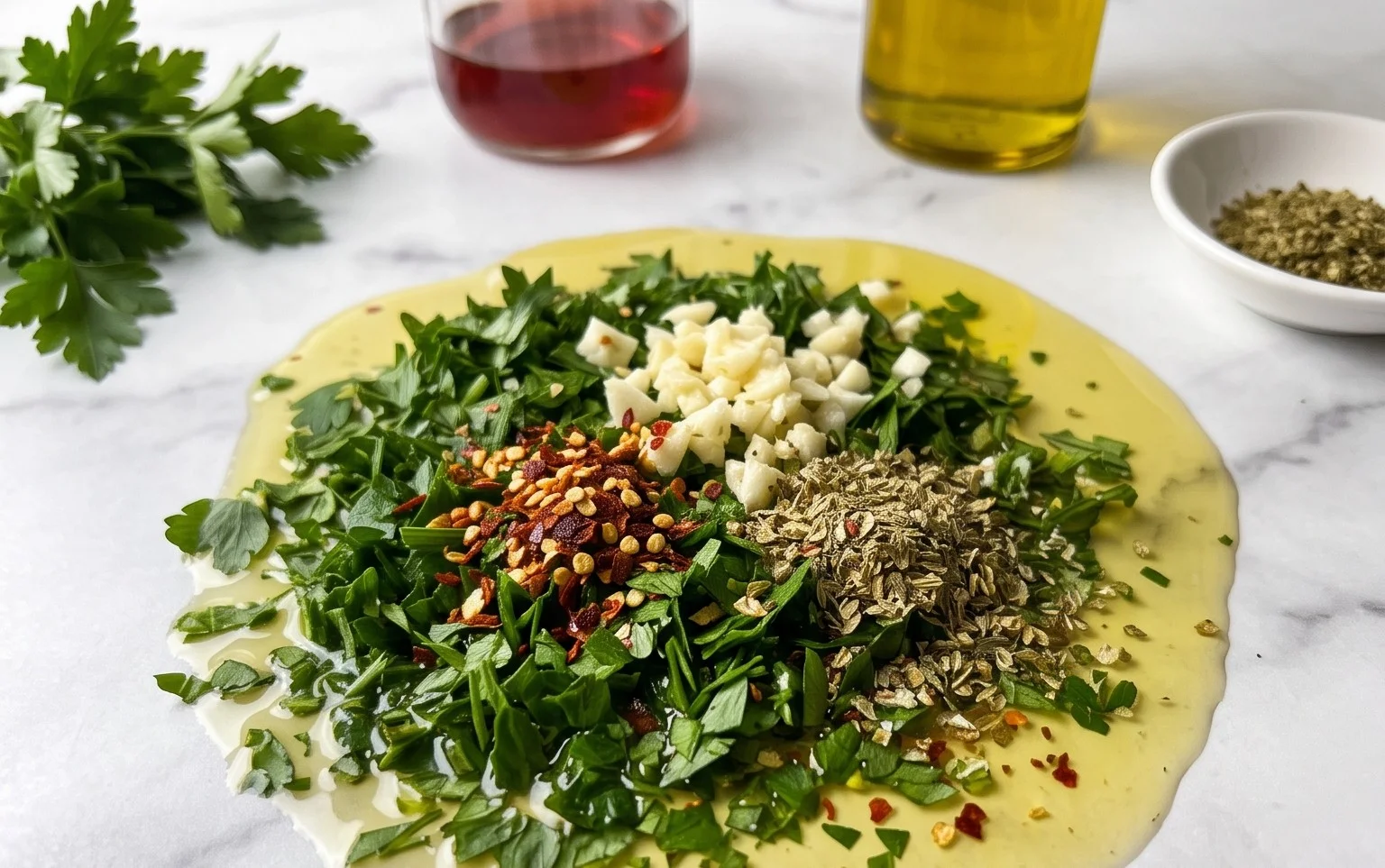
1. Prepare Your Fresh Herbs: Begin by gathering your fresh parsley and cilantro. For optimal flavor and texture, it’s crucial to use fresh herbs. Rinse them thoroughly under cool water and then pat them completely dry. You can use a salad spinner for this, or gently pat them with paper towels. Any excess moisture will dilute the flavor and affect the consistency of your sauce. Remove any thick stems from the parsley and cilantro, as these can be tough and bitter. You want to use just the leafy parts. If you’re using fresh oregano, strip the leaves from the stems as well. If you’re opting for dried oregano, measure out 1 teaspoon and set it aside.
2. Finely Chop the Aromatics: Next, it’s time to tackle the aromatics. Take your red onion (or shallot, if you prefer a milder flavor) and mince it very finely. The smaller the pieces, the better they will meld into the sauce. You want them almost to a paste-like consistency if possible, without being mushy. For the garlic, peel the cloves and then mince them equally finely. You can also use a garlic press if you have one, as this will ensure a very fine mince and release the garlic’s potent flavor. The finer you chop these ingredients, the more evenly they will distribute throughout the chimichurri, preventing large, overpowering bites.
3. Combine the Greens and Aromatics: In a medium-sized bowl, combine your finely chopped parsley, cilantro, red onion (or shallot), and garlic. If you are using fresh oregano, add it here as well. At this stage, you’re creating the flavor base of your chimichurri. The combination of these fresh ingredients is what gives this sauce its characteristic vibrant green color and robust aroma. Take a moment to inhale the fragrant blend – it’s already promising deliciousness!
4. Build the Flavorful Dressing: Now it’s time to add the liquid components that will bind everything together. Pour in the red grape juice vinegar and the fresh lemon juice. The vinegar provides a crucial tang and acidity, which cuts through richness and brightens the overall flavor profile. The lemon juice adds another layer of citrusy brightness. Add the salt and the red pepper flakes at this stage. Remember, you can always add more salt and pepper flakes later to adjust to your taste, so start with the recommended amount. Stir these ingredients together with the herbs and aromatics. This will start to slightly wilt the herbs and begin to marry the flavors.
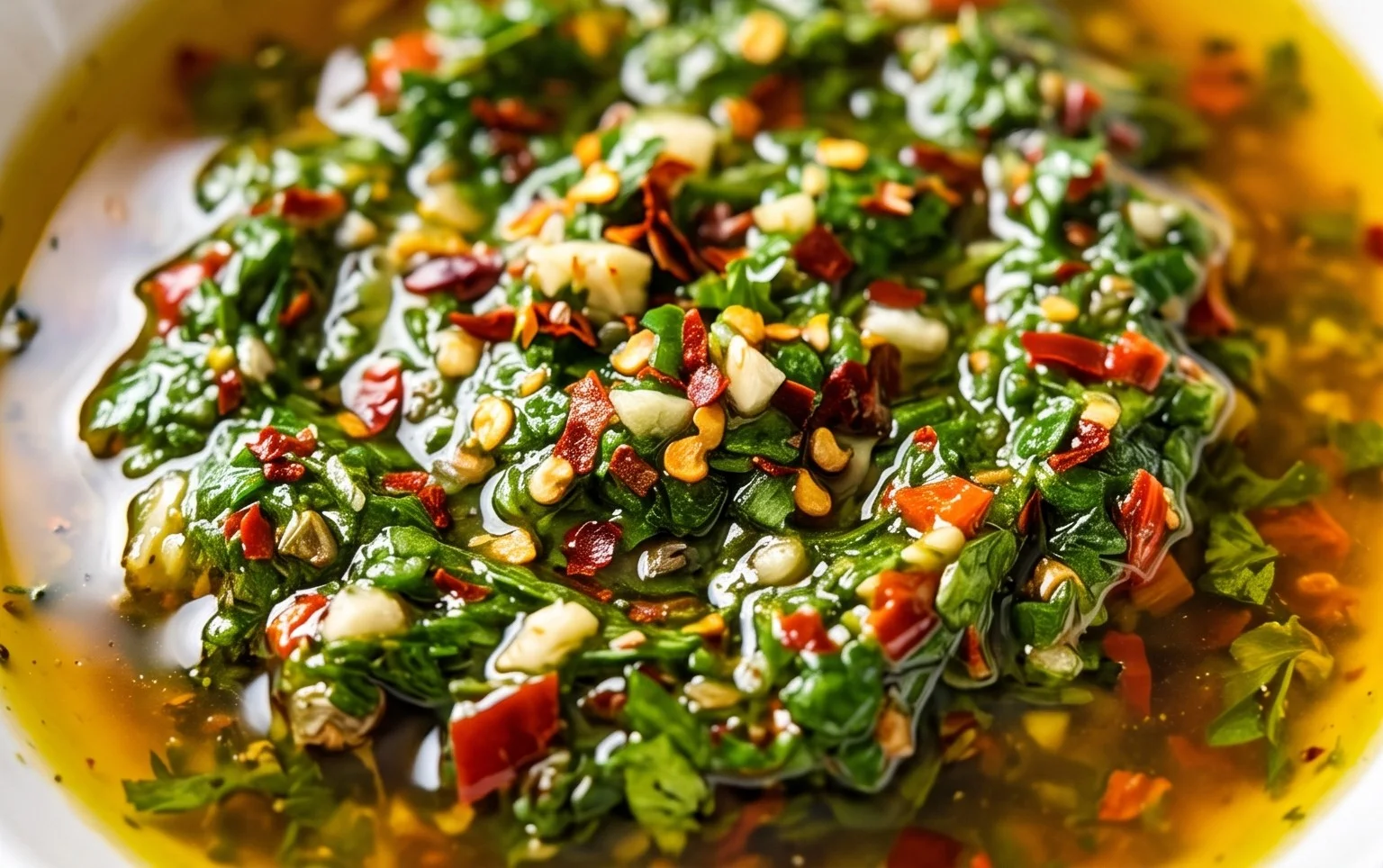
5. Emulsify with Olive Oil: The final step is to introduce the olive oil and create a beautiful emulsion. Slowly drizzle in the 3/4 cup of olive oil while continuously whisking the mixture. The whisking action helps to emulsify the oil and vinegar, creating a cohesive sauce rather than separated ingredients. Continue whisking until the sauce is well combined and has a slightly thickened, dressing-like consistency. Taste your chimichurri now and adjust the seasoning. Does it need more salt? A pinch more red pepper flakes for heat? A touch more vinegar or lemon juice for extra tang? Don’t be afraid to tweak it until it’s perfect for your palate. The sauce will continue to develop flavor as it sits, so allowing it to rest for at least 15-30 minutes before serving is highly recommended. This allows all the flavors to meld beautifully.
Serving and Storing Your Chimichurri
Once your chimichurri is ready, transfer it to an airtight container. It will keep in the refrigerator for up to a week, though its flavor is often best within the first few days. The vibrant green will mellow slightly over time, but it will still be incredibly delicious.
Chimichurri is incredibly versatile. It’s a classic accompaniment to grilled steaks, lamb chops, and chicken. It also works wonderfully with grilled fish, roasted vegetables like potatoes and asparagus, or as a topping for avocado toast. Don’t be afraid to experiment! You might find yourself reaching for this zesty sauce more often than you think. Enjoy the fresh, vibrant taste of your homemade chimichurri!
Conclusion:
There you have it – your guide to mastering the vibrant and zesty chimichurri sauce! This recipe truly is fantastic because it’s so incredibly versatile, bursting with fresh herb flavors, and surprisingly simple to whip up. It’s the perfect way to elevate grilled meats, roasted vegetables, and even your everyday salads. Don’t be afraid to experiment with it; its bright, herbaceous notes are a wonderful addition to so many dishes. I highly encourage you to give this chimichurri recipe a try. You’ll be amazed at how a few fresh ingredients can transform your meals from ordinary to extraordinary. It’s a staple in my kitchen, and I’m confident it will become one in yours too!
Frequently Asked Questions:
Can I make chimichurri sauce ahead of time?
Absolutely! Chimichurri sauce actually tastes even better the next day, as the flavors have more time to meld. Store it in an airtight container in the refrigerator for up to a week. You might need to give it a good stir before serving.
What are some other ways to use chimichurri besides on grilled meats?
The possibilities are endless! Try it as a marinade for chicken or fish, a drizzle over roasted potatoes or sweet potatoes, mixed into scrambled eggs, or as a flavorful spread for sandwiches and wraps. It’s also delicious tossed with pasta or served alongside pan-seared halloumi.
Can I adjust the spice level of my chimichurri?
Definitely! If you prefer a spicier kick, you can finely mince a deseeded chili pepper (like a jalapeño or serrano) and add it to the sauce. For a milder version, omit the chili pepper altogether.
Chimichurri Sauce
A vibrant and herbaceous Argentinian sauce perfect for grilled meats or vegetables.
Ingredients
-
1 1/2 cups well packed (42g) fresh parsley
-
1/2 cup well packed (20g) fresh cilantro
-
1/4 cup (9g) fresh oregano or 1 tsp dried
-
1/4 small red onion or one small shallot
-
3 garlic cloves
-
3 Tbsp red grape juice vinegar
-
2 Tbsp fresh lemon juice
-
1/2 tsp salt, (then more to taste)
-
1/4 tsp red pepper flakes ((optional, more or less to taste))
-
3/4 cup olive oil
Instructions
-
Step 1
Finely chop the fresh parsley, cilantro, oregano (if using fresh), red onion (or shallot), and garlic. Alternatively, pulse them in a food processor until finely minced, being careful not to over-process into a paste. -
Step 2
In a medium bowl, combine the chopped herbs, onion/shallot, and garlic. -
Step 3
Add the red grape juice vinegar and fresh lemon juice to the herb mixture. -
Step 4
Stir in the salt and red pepper flakes (if using). -
Step 5
Gradually whisk in the olive oil until the sauce is well combined and emulsified. -
Step 6
Taste and adjust seasoning with more salt or red pepper flakes if desired. -
Step 7
Let the chimichurri sauce sit for at least 10-15 minutes at room temperature to allow the flavors to meld before serving. Can also be made ahead and refrigerated.
Important Information
Nutrition Facts (Per Serving)
It is important to consider this information as approximate and not to use it as definitive health advice.
Allergy Information
Please check ingredients for potential allergens and consult a health professional if in doubt.